College of Medicine Badging Program - Highlighting HEAL Students
The College of Medicine graduating class of 2026 enhanced their medical education through engagement in its badging program, in which faculty-led learning communities provide opportunities to enhance the medical student experience. The Health, Education, Advocacy and Leadership (HEAL) learning community is one of several badge programs in the COM. Others include Research and Scholarship, and the new Oak Badge in Medical Humanism. See more on the COM Badges here.
The HEAL student-centered learning communities focus on rural and underserved patient populations, and consist of four concentrations:
- Medical Spanish Essentials (MSE)
- Patient Advocacy and Community Health (PACH)
- Rural Medical Education (RMED)
- Urban Primary Care Practice (UPCP)
Victor Torres, M.A., and Claudia Garcia, M.A., direct the MSE program, while Michael Appleman, M.A. Ed., directs the overall HEAL learning community, and its PACH, RMED and UPCP communities. Students in these programs engage in a variety of co-curricular activities to earn points in areas such as self-assessment, campus engagement, clinical training, service learning, scholarship, and peer education.
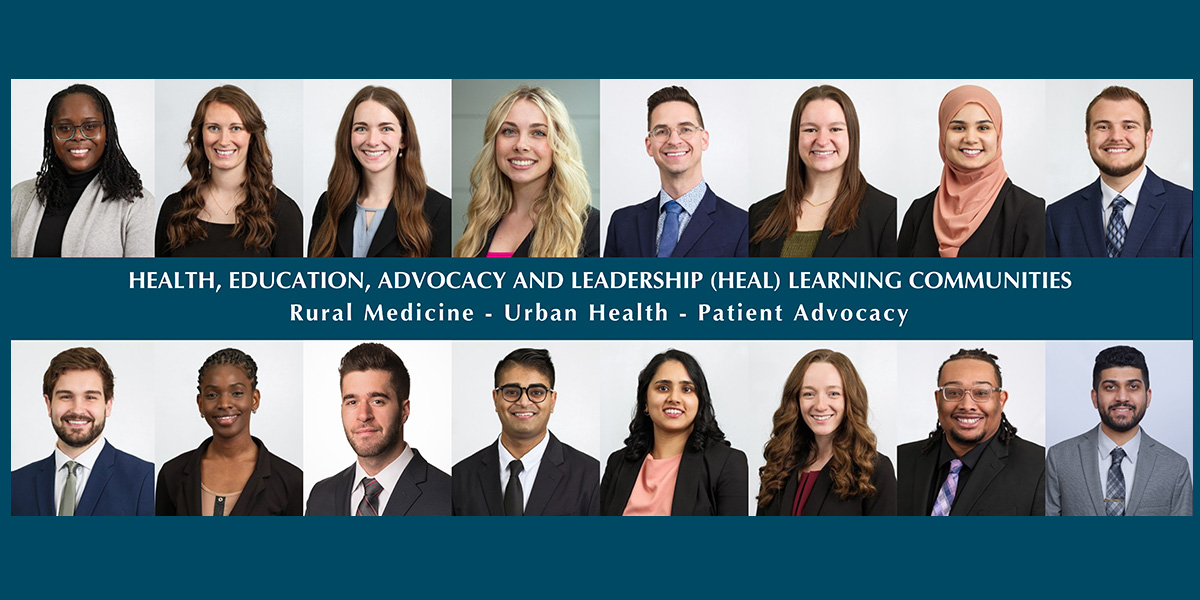
The HEAL learning communities are large, with well over 350 medicine students, M1-M4. Among these students, the Class of 2026 was particularly high achieving, in which the following “top 20” earned the highest badges in the programs.
TOP 20 HEAL STUDENTS (by learning community)
Medical Spanish Essentials (MSE) Class of 2026
- Francisco Reyes, Platinum
- Luis Pozo, Platinum
- Martha Solano, Platinum
- Emily Arellano, Platinum
Patient Advocacy and Community Health (PACH) Class of 2026
- Brandon Petrovich, Platinum
- Adiaratou Ba, Platinum
- Joseph Kessler, Platinum
- Samia Habib, Gold
Rural Medical Education (RMED) Class of 2026
- Sydney Bitting, Platinum
- Natasha Salmen, Platinum
- McKenzie Parks, Platinum
- Dylan Smith, Platinum
- James Berry, Platinum
- Caleigh Rudolph, Gold
Urban Primary Care Practice (UPCP) Class of 2026
- Lauriel Powell, Platinum
- Erin Kaminski, Platinum
- Sanaiya Ahmed, Platinum
- Samaresh Rao, Gold
- Richard Robertson, Silver
- Omar Hameed, Silver
WHAT HEAL STUDENTS HAVE TO SAY:
Sanaiya Ahmed (UPCP ’26): “The HEAL Urban Primary Care Practice (UPCP) program was a great asset to me all throughout medical school. From the first day of meeting my fellow classmates in this program, I felt a sense of community and belonging that I was able to carry all throughout the 4 years of medical school. Further, through the last days of M4, when I was interviewing for residency, I could speak about this program because it deeply shaped my professional identity and goals for the future. I was able to greatly benefit from the UPCP program and all the excellent opportunities it provided for me.”
Adiaratou Ba (PACH ’26): “When I joined PACH, my goal was to better understand the challenges my patients face outside of the clinical setting, factors that significantly impact their health but can often go unrecognized. I really valued the opportunity to engage in lunch discussions, which consistently broadened my perspective.
Serving as a health coach through the pathways program was one of the most meaningful experiences of my medical school journey. I especially appreciated building a relationship with my patient and working together to navigate the barriers she faced beyond the clinic. It was incredibly rewarding to support her in addressing those challenges and to see firsthand how these social factors influence health outcomes.”
James Berry (RMED ’26): “Participating in RMED through the HEAL learning communities was the highlight of my medical education. Through RMED, I acquired early clinical experience through the Leroy Rodgers Family Medicine Preceptorship Program and volunteered as a health coach at Aultman Alliance Community Hospital. Most notably, I attended the 2024 Rural Health Scholars Retreat and advocated for rural health on Capitol Hill in the 2025 National Rural Health Association (NRHA) Rural Health Policy Institute. I would not have had access to these opportunities without RMED and highly recommend HEAL learning communities to anyone interested in social justice.”
Samia Habib (PACH ’26): “During the summer of 2024, I had the opportunity to provide health education at schools in rural villages near Lahore, Pakistan. This work was made possible through the support of the HEAL program, whose funding and mentorship allowed me to develop educational materials on proper hygiene practices and distribute backpacks filled with essential hygiene supplies to students. This experience reinforced many of the lessons I gained through the program, particularly the profound need for accessible primary care. It also served as a reminder that, as future physicians, we must look beyond clinical treatment alone and address the social and structural barriers that shape health outcomes. I know that this experience and the knowledge I gained through the HEAL program will help me be a well-rounded physician committed to treating the whole patient."
Natasha Salmen (RMED ’26): “RMED was a defining part of my medical education, connecting me with like-minded peers and mentors who share a commitment to rural health and populations. One of my most impactful experiences was engaging in the excellent RMED Seminar Series during my preclinical years. These sessions provided valuable perspectives on rural medicine and patients, that extended beyond the standard curriculum and helped shape how I think about access to care. Through RMED, I gained the confidence to pursue my interest in rural dermatology—a path I had not initially considered. The program also opened doors to national opportunities, including my role as the medical student liaison for the Rural Access to Dermatology Society. Through this involvement, I have built strong mentorship relationships, engaged in meaningful projects, and further developed my commitment to improving access to dermatologic care in rural and underserved communities. RMED has not only enriched my education but has also played a central role in defining my career goals and reinforcing my dedication to serving rural populations.”
Dylan Smith (RMED ’26): "The HEAL-RMED Learning Community has been one of the most meaningful parts of my medical school experience. I feel fortunate to have been part of a group that not only fostered lifelong friendships but also provided a strong support system during the transition intoa and through medical school. Through experiences such as the RMED Seminar Series “lunch and learns” focused on rural medicine, and service in the Health Coach program, I gained valuable insight into the unique challenges faced by the patient populations we will serve. Coming from a rural background, these experiences deepened my understanding of health disparities I have witnessed firsthand and strengthened my commitment to addressing gaps in care within these communities. Overall, the RMED learning community has had a lasting impact on both my personal growth and my development as a future physician.”