Exploring the nature of sleep
Meera Nair, a second-year College of Medicine student, shared her experience from her summer research experience with the University of Pittsburgh Center of Sleep and Circadian Science.
Can you describe your summer experience?
This past summer, I conducted research at the Center for Sleep and Circadian Science at the University of Pittsburgh under the mentorship of my principal investigator (PI), Dr. Jessica Levenson. My research focused on exploring the nature of sleep and the barriers faced by youth involved in the juvenile justice system.
Under Dr. Levenson’s guidance, I reviewed and analyzed interview data, developed a codebook using both deductive and inductive processes, and conducted a thematic analysis of the findings. I also had the privilege of collaborating with and mentoring University of Pittsburgh undergraduate student, Emma Stern. Together, we reached consensus on coding and thematic analysis for each interview, ensuring the rigor and consistency of our work.
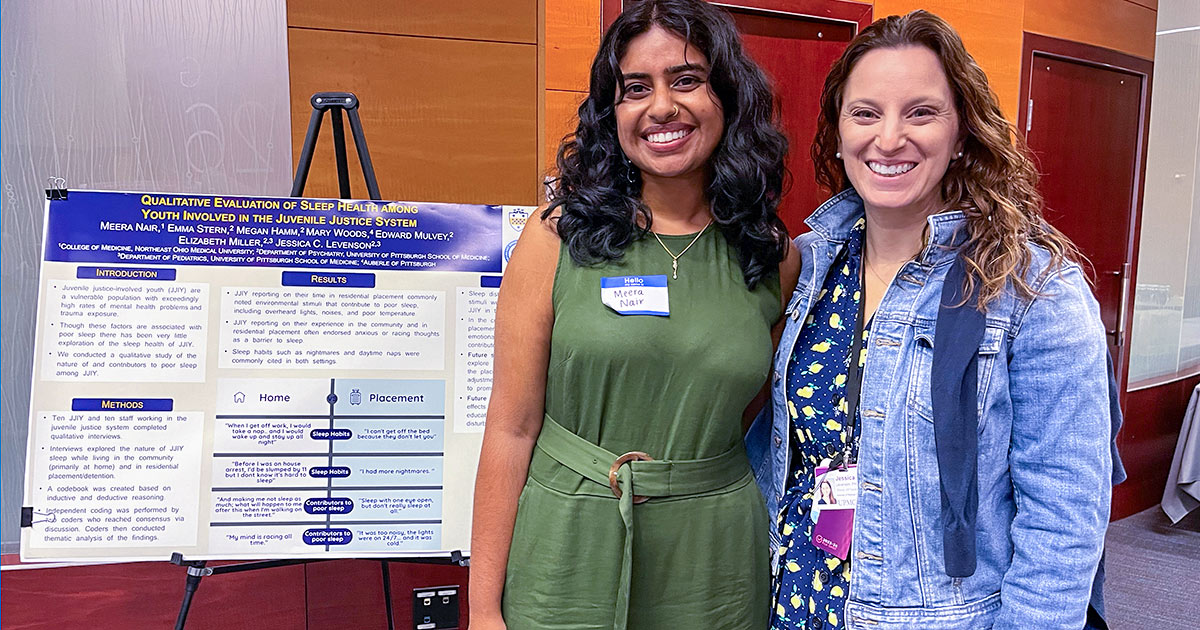
In November, I presented “Contributors of Poor Sleep Among Youth Involved in the Juvenile Justice System” at the Center of Sleep and Circadian Science Research Day and was honored with the Outstanding Student Poster Award.
What did you learn from this experience and how will it impact your career?
I gained a deeper appreciation for the importance of a holistic approach to research and the value of each step in the process. While my primary summer research project focused on a detailed analytical process of reviewing interview data, I also contributed to other projects by creating recruitment materials, visiting recruitment sites and obtaining participant consent.
Working with participants, youth who were involved in the juvenile justice system, brought an advocacy-driven dimension to the research. Hearing their firsthand experiences during site visits enriched my perspective and enhanced my role as a medical student researcher and future physician.
How did you find and obtain this experience?
In December 2023, I had the opportunity to shadow Dr. Asim Roy, medical director of the Ohio Sleep Medicine Institute and a talented neurologist specializing in sleep medicine. That ignited my interest in the field. Motivated by this experience, I searched online for summer externships in sleep medicine and was thrilled to discover the Translational Research Training in Sleep Medicine program at the University of Pittsburgh.
I submitted an interest form and followed up in January. Later that month, I had a meeting with one of the training directors, Dr. Peter Franzen, who guided me through the application process and discussed my interest in neuroscience and sleep medicine. Following our discussion, I received a list of potential mentors and ultimately finalized my mentor match with my principal investigator, Dr. Levenson.
I began the onboarding process in April and May and officially started the in-person program after completing my Maymester coursework.
Do you have any advice for students interested in something similar?
My key advice is to take a proactive approach. Opportunities do not always come easily, and finding a secure research experience for the summer can involve uncertainty or experiences falling through. Starting your search earlier in the year, rather than waiting until the spring, will improve your chances of finding opportunities that align with your interests in both field and location.
For students with financial considerations, summer research opportunities are still a viable option. I encourage exploring programs like T32 grants, which often provide a monthly stipend to cover living expenses while conducting research.