Inside the minds of healthcare leaders
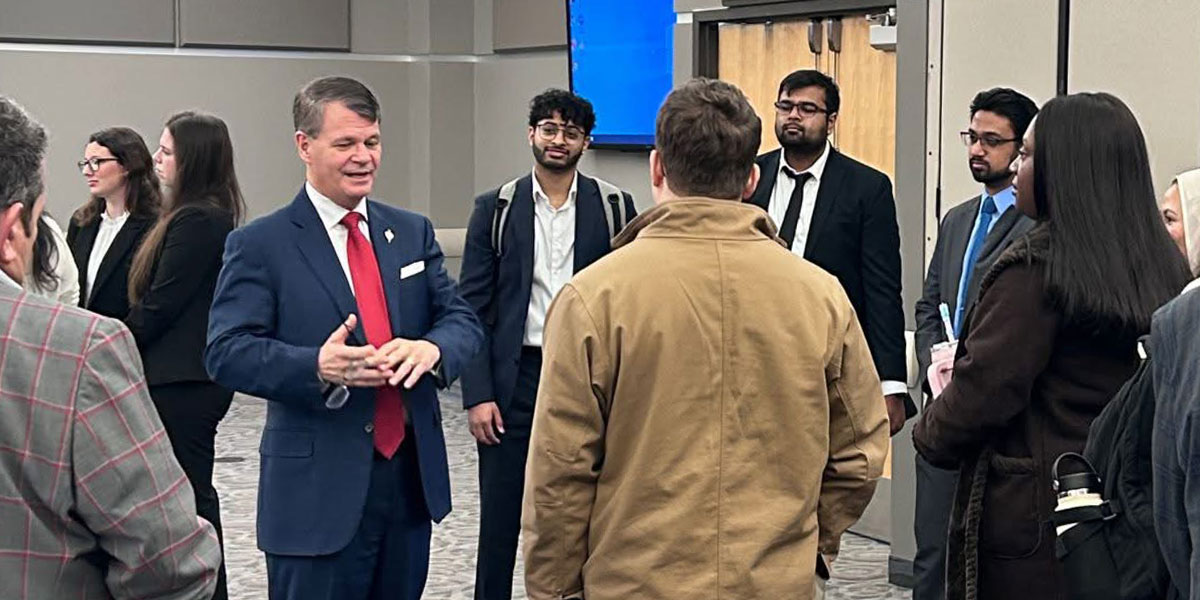
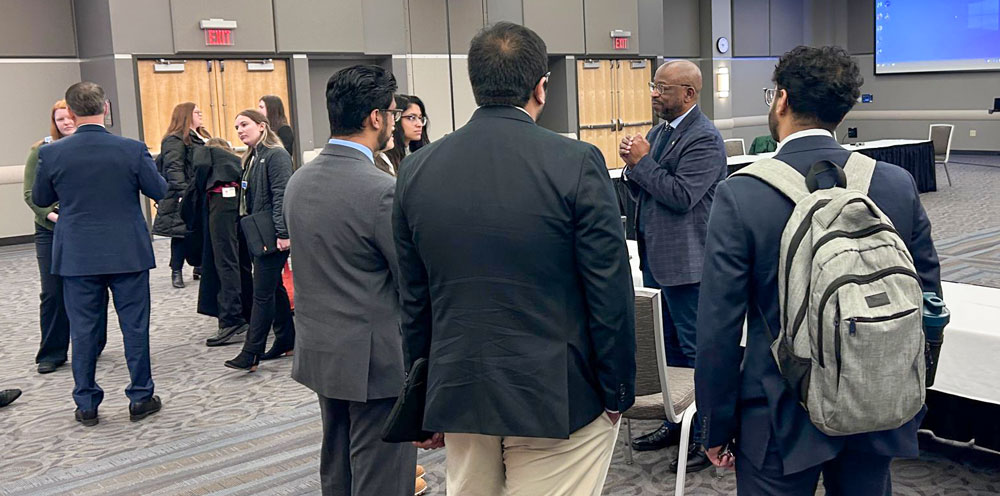
Navigating the complex landscape of healthcare requires more than just textbook knowledge. In February, students in the Master of Leadership in Health Systems Science (M.L.H.S.S.) program experienced a unique learning opportunity, stepping outside the classroom to engage directly with a panel of leaders from four prominent healthcare organizations. This dynamic session provided real-world perspectives, illuminating the challenges and opportunities shaping the future of health systems.
The panel included:
- Timothy Crone, M.D., M.B.A., vice president of Cleveland Clinic Mercy Hospital
- Michael Forbes, M.D., chief academic officer at Akron Children’s Hospital
- John Langell, M.D., Ph.D., M.P.H., M.B.A., president, NEOMED
- Janice Murphy, M.S.N., FACHE, president and chief executive office of Sisters of Charity Health Systems
Through candid discussions, the leaders provided students with invaluable lessons on understanding leadership styles, navigating challenges, piloting career advancements and developing the skills to embrace new challenges.
Rohith Revan, a student in the M.L.H.S.S. program, reflected on his experience at the panel:
“The leadership panel was an extremely valuable experience that my peers and I greatly enjoyed. There were some difficult questions, and all of the leaders rose to answer them in ways that I found deeply insightful. Some topics surrounded political issues that have understandably stirred anxiety in myself and my peers as future medical professionals. However, the perspective and positive outlook the leaders provided helped alleviate some of my worries about how they might impact the future of medicine. Although all these leaders came from different backgrounds, I appreciated that they shared many of the same values. The ideas of finding joy in your work, focusing on leading yourself as an individual, and an emphasis on empathy were all present among the stories shared with us. The key takeaways I felt were present were the importance of relationships with others and appreciating that strong leaders are at their core work in service to their organizations.”