Meet the faculty: M.S. in Mental Health Practice program
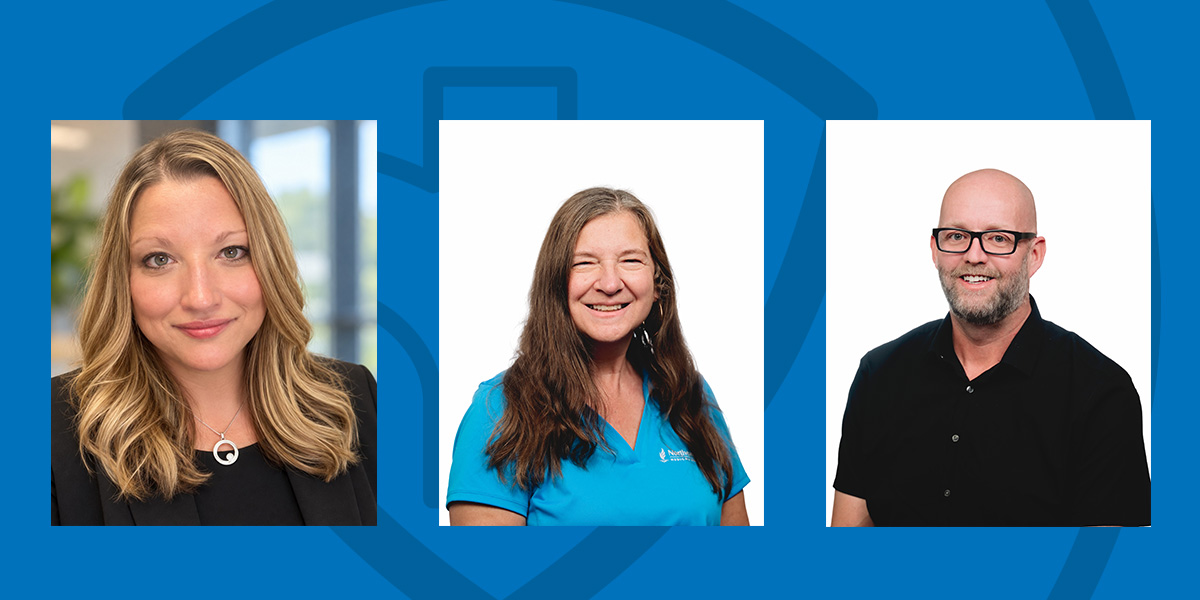
Recruitment for the new Master of Science in Mental Health Practice is well underway. As the College of Graduate Studies prepares to welcome the first cohort in January, new faculty members have also joined the University to guide the program. They include Erin Fekete, Ph.D., professor and program director; Natacha Keramidas, Ph.D., assistant professor; and Eric Perry, Ph.D., associate professor.
The new faculty shared a bit about themselves with The Pulse.
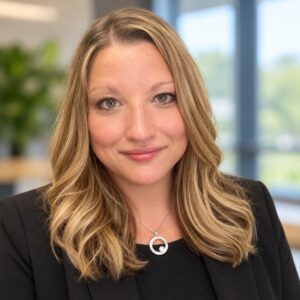 ERIN FEKETE, Ph.D.
What is your title and how would you describe your role?
I am a professor of graduate studies and the program director for the Master of Science in Mental Health Practice (MS MHP) program at NEOMED. My primary focus is overseeing curriculum development, recruiting students and developing policies and procedures for the new MS MHP program. I am also assisting Dean Julie Aultman and Dr. Richard Kasmer with community partnerships and site development for our clinical rotations.
What is your professional background? Where were you before you came to NEOMED?
I have a Ph.D. in social and health psychology from Kent State University. I did my postdoctoral fellowship at the University of Miami in the Department of Psychology and the Miller School of Medicine, where I focused on cognitive-behavioral stress management interventions for individuals living with HIV/AIDS. After completing my postdoc, I joined the faculty in the Department of Psychological Sciences at the University of Indianapolis. During my 11 years as a faculty member there, I served in various leadership roles, including program director, IRB chair, associate dean and interim dean. In 2022, I accepted a position as Dean of Arts and Sciences at Lakeland Community College to move back to Ohio and be closer to family.
What led you to NEOMED?
NEOMED is known for an emphasis on collaboration, excellence and preparing students to address real-world health care needs. I saw this position as an opportunity to combine my expertise in health psychology, my experience as an academic leader, and my commitment to student-centered education in a way that can impact not only students in this program, but also the communities they will serve. Additionally, working alongside colleagues who share a commitment to improving mental health in Ohio was also very appealing to me.
What excites you about helping to launch not only a new program but a whole new profession?
I am excited to be part of an innovative program that leads to a new profession designed to address the mental health needs of individuals in Ohio. Throughout my career, I have always been interested in translating psychological science in meaningful ways to improve people's lives. The MS MHP program offers an opportunity to do exactly that by training students to become Certified Mental Health Assistants who will expand the capacity of interdisciplinary health care teams and improve access to care.
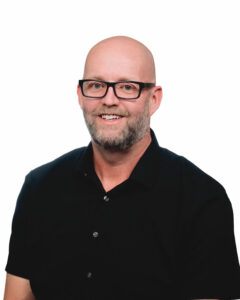 ERIC PERRY, Ph.D., NCC, ACS, LAPC (PA), BC-TMH
What is your title and your role in the program?
I am an associate professor in the new Master of Science in Mental Health Practice program at NEOMED. My primary responsibilities include teaching within the program, particularly in the areas of psychiatric diagnosis and clinical behavioral health, as well as contributing to course and curriculum development across other areas of the program. I also participate in the clinical skills components of the program, including helping students integrate what they learn academically with the practical skills they will need when working with patients and interdisciplinary healthcare teams.
Because the program and CMHA (Certified Mental Health Assistant) profession are both new, my role also involves helping to shape how we educate and prepare future CMHAs. This means thinking beyond individual courses and considering competencies, assessment, clinical preparation, professional identity as well as how the profession will fit into the broader behavioral healthcare system.
What is your professional background? Where were you before you came to NEOMED?
My professional background is in clinical mental health counseling, counselor education, higher education and academic program development. I have a Ph.D. in counselor education and supervision and have spent much of my career working in graduate education as a faculty member, program director, administrator, curriculum developer and clinical mental health counselor.
Before coming to NEOMED, I was a program director and faculty member within a large clinical mental health counseling program.
Throughout my career, I have been involved in the development and administration of online graduate counseling programs and have taught across a wide range of areas including diagnosis, psychopathology, assessment, research, counseling skills, addictions, supervision and clinical practice. I have also remained connected to clinical work, primarily serving patients in community counseling settings, EAP programs and school settings. Maintaining that connection has been important to me as it helps keep my teaching grounded in the realities of providing behavioral healthcare and the ever-changing landscape of care.
What led you to NEOMED?
NEOMED offered a particularly interesting opportunity because it brought together several different parts of my professional background: clinical mental health, teaching, curriculum development and program building. I was especially attracted to the opportunity to help build something new that meets the needs of our communities in a different way. The CMHA program provided an opportunity to apply that experience while working within a university that is deeply connected to healthcare education and driven by innovation.
NEOMED also appealed to me because of the shared focus on healthcare and interdisciplinary education. Mental health is health, and behavioral healthcare works best when professionals are able to communicate and collaborate across disciplines. The opportunity to educate students in an environment where that kind of collaboration is part of the larger culture was very appealing to me.
What excites you about helping to launch not only a new program but a whole new profession?
Mental health needs continue to place enormous demands on the healthcare system, and there are significant gaps in access to care. Although the CMHA profession will help by expanding the capacity of the mental health workforce, that is not the only way they will contribute. CMHAs will have the opportunity to provide more regular monitoring, communication and care that we hope to show has a meaningful impact on not just addressing shortfalls in the workforce, but on outcomes as well. The opportunity to help develop a new type of behavioral health professional who can become part of this solution is incredibly meaningful.
It is also exciting to know that our first students will do more than graduate from a new program. They will help define what it means to be a CMHA. The standards we establish, the competencies we emphasize and the professional identity we help students develop now can influence the profession well beyond our first cohort.
Anything else you’d like to add?
One of the things I have learned over the course of my career is that I really enjoy building things with other people. Whether it is a course, a program or now a new profession, the best work happens when people with different experiences and perspectives create alongside one another. That makes this work particularly exciting because developing the CMHA profession requires us to bring together perspectives from behavioral health, medicine, education and the communities we ultimately hope to serve.
I also stay very grounded in my student-centered approach to my work. In higher education, we often spend a great deal of time talking about curriculum, competencies, assessment, policies and outcomes. Those things are important, but they are ultimately tools. The real goal is preparing students to become thoughtful, competent, ethical and compassionate professionals who can make a meaningful difference in the lives of the people they serve. To accomplish this, we need more than just those components alone.
That is also where I see such a strong connection between the CMHA program and the mission and values of NEOMED. At its core, this program is about responding to a real healthcare need. We are charged with educating professionals who can strengthen the behavioral health workforce, work collaboratively as members of healthcare teams, and ultimately help improve access to care for individuals, families and communities.
As a counselor educator and clinician, I have always believed that technical knowledge and human connection are central to success in any role in healthcare. We want our students to understand diagnosis, assessment, treatment and healthcare systems, but we also want them to understand that every diagnosis belongs to a person with a story, a family, strengths, challenges and hopes for their future.
As a new program and new profession, we have a profoundly unique opportunity to create something innovative while remaining grounded in a very human purpose: preparing professionals who can help meet the mental health needs of those within our own communities. To me, that combination of education, service, collaboration and innovation is very much in keeping with what NEOMED represents, and our commitment to education, innovation, collaboration, and improving the health of the communities we serve.
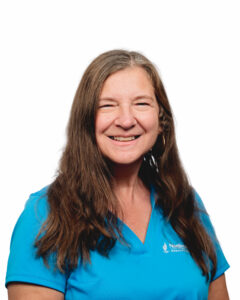 NATACHA KERAMIDAS, Ph.D.
What is your title and how would you describe your role?
I am an assistant professor in the new program and very excited to be a part of it.
What is your professional background? Where were you before you came to NEOMED?
Prior to this position, I was a staff psychologist at the University of Akron Counseling Center and therefore very familiar with the challenges that college students face during their studies. I was also the outreach coordinator, and provided numerous trainings and workshops related to mental health to the campus community and beyond, which further extended my understanding of the impact of mental health as well as the importance of community and collaboration.
Prior to earning my Ph.D. in counseling psychology, I worked in International MBA career counseling, and then in recruiting and admissions at several institutions, including Clark University, University of Pennsylvania, Babson College and the University of Arizona. I then had a pivotal year where I worked for the Program in Integrative Medicine at the University of Arizona which really shifted my interest towards physical and psychological well-being.
What led you to NEOMED?
One of my mentors sent me the listing for this position at NEOMED and encouraged me to consider it. I saw it as an opportunity to make a wider impact in a field that continues to be critical and still demands creativity and innovation to address challenges with both shortages of providers and increasing demand. I also liked the idea of joining an innovative and entrepreneurial educational program that will be at the forefront of a whole new profession.
What excites you about helping to launch not only a new program but a whole new profession?
I am thrilled to be here and look forward to meeting and getting to know new colleagues at NEOMED!
Related
WATCH: What is the Certified Mental Health Assistant program?