Recent College of Pharmacy graduate and Dean of the College of Graduate Studies featured in Bioethics Quarterly
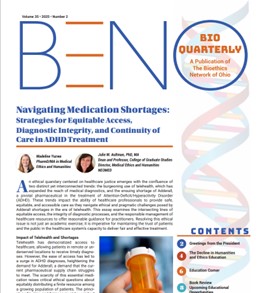
2025 College of Pharmacy Graduate Madeline Yuzwa, Pharm.D/M.A., and the Dean of COGS Julie M. Aultman, Ph.D., M.A., were recently featured in the spring 2025 edition of the Bioethics Network of Ohio (BENO) Bio Quarterly. The article, “Navigating Medication Shortages: Strategies for Equitable Access, Diagnostic Integrity, and Continuity of Care in ADHD Treatment” by Dr. Yuzwa and Dr. Aultman examines the ethical and practical challenges arising from the increased use of telehealth—which has broadened access to ADHD diagnoses—and the simultaneous national shortage of Adderall.
The authors highlight how these trends strain healthcare systems and raise critical questions about fairness in distributing limited medication. Drawing on principles of autonomy, justice, beneficence, and non-maleficence, they argue for strategies that prioritize patients based on symptom severity, improve telehealth diagnostic standards, ensure comprehensive follow-up care, and strengthen collaboration across healthcare, regulatory, and pharmaceutical sectors. Ultimately, they advocate for a balanced, ethically grounded approach to maintain quality, equitable ADHD care amid ongoing shortages.
Dr. Yuzwa's article was originally written for a course in the Master of Arts in Medical Ethics and Humanities program.
In this same publication, Dr. Aultman published the article, “The Decline of Humanities and Ethics Education: Causes, Consequences, and Emerging Trends.” Humanities and ethics education in the U.S. has faced major difficulties recently because of political, economic, and cultural changes. Factors like reduced federal funding, higher tuition costs, changing educational priorities, and rising anti-intellectual attitudes have all contributed to a decline in humanities enrollment. Still, trends such as more students pursuing humanities minors suggest possible ways to renew interest in the field. There is a continued need to highlight how ethics and the humanities build critical thinking skills to help students handle a complex society.
Together, these contributions by our colleagues underscore NEOMED’s leadership in addressing urgent ethical issues across both clinical practice and education. They also highlight the vital role of interdisciplinary scholarship in shaping a more thoughtful, equitable future for healthcare and society.