Stitching together a path: A reflective journey through PRS DIME at UCSD
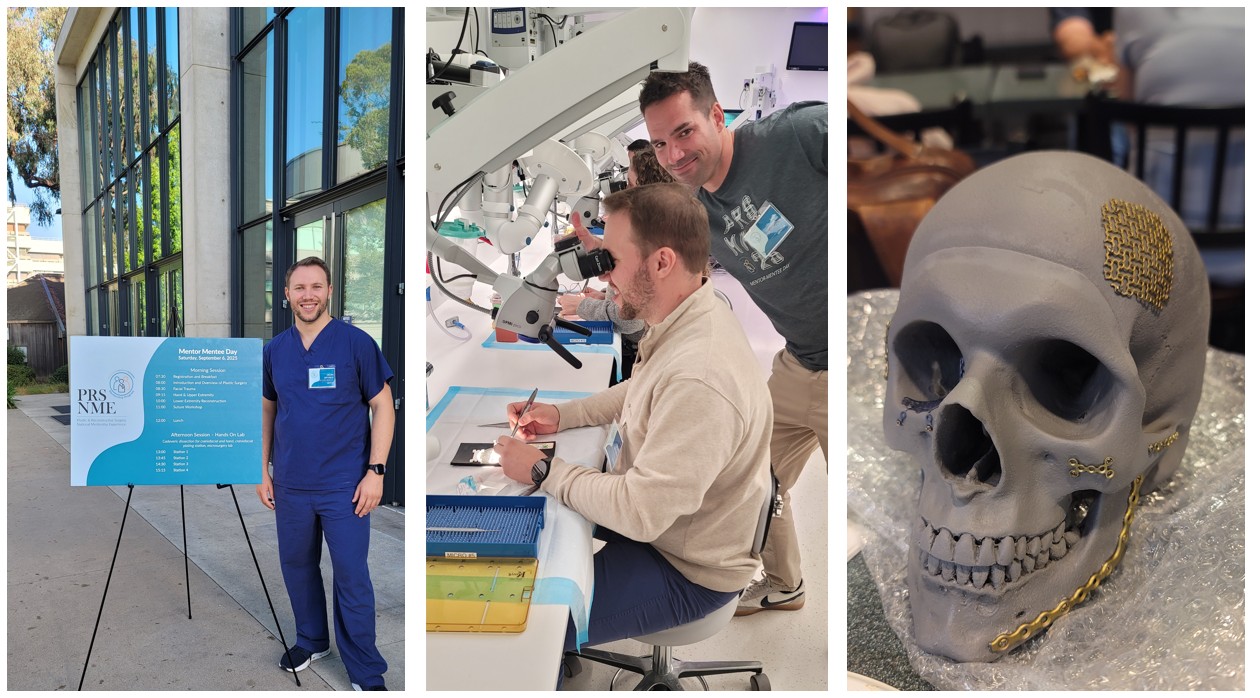
Third-year medical student Dean Spyres participated in the Plastic and Reconstructive Surgery Diversity and Inclusion Mentorship Experience (PRS DIME) at the University of California San Diego (UCSD). He shared his experience with The Pulse.
For many medical students—especially those without a home plastic surgery program—entering the field can feel like navigating without a map. Mentorship may be limited, exposure minimal and research opportunities hard to come by. That was my reality before attending PRS DIME at UCSD.
What I found was more than just a program—it was a pivotal experience that reshaped my understanding of what a future in plastic surgery could look like.
Building the Foundation: Didactic Sessions
The day began with high-yield didactic lectures led by UCSD’s expert faculty. Topics included facial trauma, hand trauma and lower extremity reconstruction—areas we learn very little about in medical school. These sessions provided a structured introduction to the clinical reasoning behind surgical decision-making and taught us a practical approach to deal with complex reconstructive problems.
From Theory to Practice: Simulation Training
After the lectures, we transitioned to a full afternoon of hands-on simulation training—arguably the most impactful part of the day.
We began with an introduction to microsurgery, learning how to handle micro-instruments and suture delicate vessels under the microscope. Practicing this highly specialized technique so early in my training was both challenging and motivating—it offered a rare glimpse into the precision and discipline that define this subspecialty. (A photo from this station is included above.)
Next, we moved into the realm of facial plastic surgery, where we performed procedures like deep plane and SMAS facelifts, as well as nasal reconstruction, all on cadaveric heads. Being able to explore facial anatomy in such a detailed, hands-on way made the experience feel real and relevant. These were no longer abstract procedures—they were skills we were actively beginning to learn.
We concluded the session by practicing facial fracture plate fixation on skull models, placing hardware to stabilize midface and orbital fractures. (A photo of a plated skull is also included.) It was incredible to see how reconstructive principles come to life through careful technique and surgical planning. This progression—from microsurgery to aesthetic and trauma-based reconstruction—captured the full scope of what plastic surgery offers.
The Power of Mentorship and Community
Beyond the technical experience, what truly elevated PRS DIME was the sense of community it created. I met students from all across the country, each of us bringing different backgrounds and experiences, but all driven by a shared curiosity about this unique field.
Through the program, I was paired with Jason, a PGY‑5 at UCSD. Over several conversations, he became an essential mentor, offering advice on everything from preparing for Step 1 to identifying research opportunities and understanding what residency programs value. For students without home programs, this kind of mentorship can be a lifeline—and PRS DIME delivers that connection intentionally and consistently.
More details about the structure of the mentorship program—including resident pairing, research support and opportunities for longitudinal engagement—can be found on UCSD’s Plastic Surgery Mentorship Program page.
A Glimpse into the Culture
What struck me most about PRS DIME was how much it embraced both technical education and personal growth. The environment was collaborative, not competitive. Faculty and residents were approachable and genuinely invested in helping us succeed. That spirit is beautifully captured in a student-created Instagram video that highlights the day’s energy and camaraderie—something I felt deeply throughout the event.
Why PRS DIME Matters
Plastic surgery is an incredibly diverse specialty—touching every anatomical region, engaging with a wide spectrum of pathologies, and balancing precision with creativity. For many of us, especially those without home programs, gaining early access to this field is challenging. PRS DIME breaks down those barriers.
It gave me my first experience suturing under a microscope, exploring facial anatomy on cadaveric heads, and plating fractures on a model skull. More importantly, it gave me mentors, peers and a renewed sense of direction. I left feeling confident that this is the path I want to pursue—and that I’m not walking it alone.
For any student considering plastic surgery, especially those who feel like they’re starting at a disadvantage, PRS DIME offers more than a glimpse into the field—it offers a genuine place to begin.