Student Research Spotlight: Brandon Lee
First-year medical student Brandon Lee was one of more than 200 NEOMED students to present their scholarly work at the 2025 Student Research Symposium. Lee shared with The Pulse the inspiration for his work, what he learned and next steps for his research, titled “The Promise of Extracellular Vesicle microRNAs in Alzheimer’s Disease Diagnostics: Blood-Based Biomarkers and Epigenetic Modulation.”
What was the inspiration for the project? What led you to the topic?
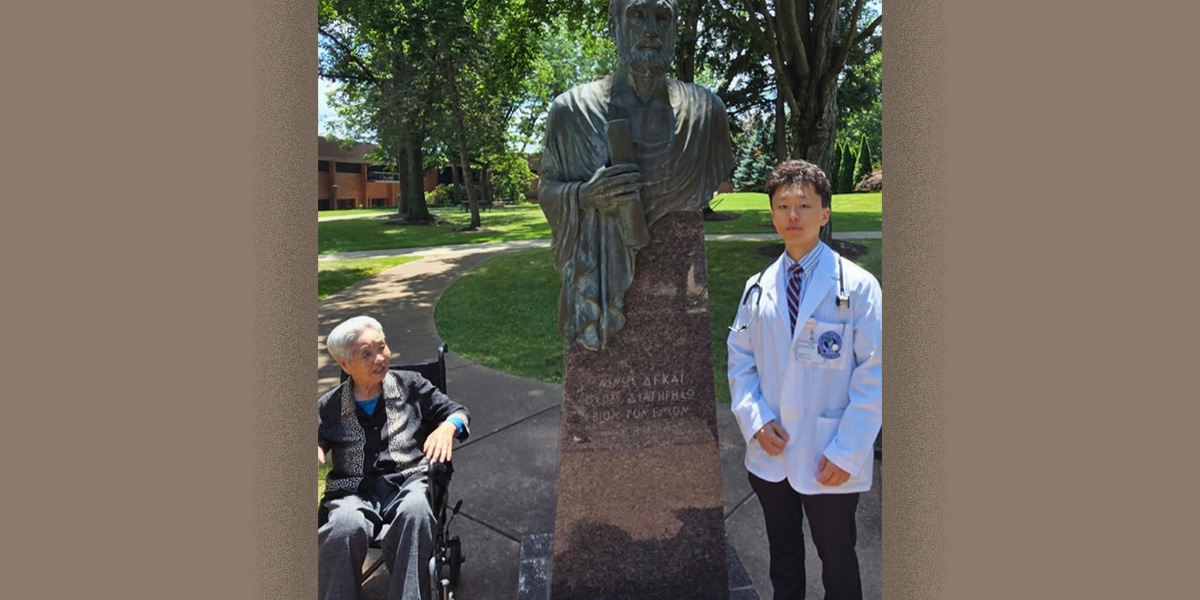
My inspiration into this topic is deeply personal. For the past 8-10 years, I have been caring after my grandmother following her Alzheimer’s disease diagnosis. Witnessing the progression of the disease firsthand profoundly shaped my perspective on medicine and fueled my desire to pursue Alzheimer's research and eventually my journey into medical school. I wanted to channel that experience into something that could make a tangible difference for other struggling families.
Briefly describe the work. What are some key findings?
This project is a review paper examining the landscape of Alzheimer’s disease diagnostics. I focused specifically on the potential of extracellular vesicle (EV) microRNAs (miRNAs) as less invasive and cost-effective blood-based biomarkers.
Key findings included:
- Specific microRNAs were found to be either upregulated or downregulated in correlation with traditional Alzheimer’s biomarkers (like amyloid-beta and tau) and clinical symptoms.
- EVs protect miRNA cargo from degradation, making them highly stable and potentially reliable indicators of the brain's pathological state via a simple blood draw.
What is the potential impact of the research?
The goal and potential impact of this research is to eliminate the diagnostic delay in current Alzheimer's disease management. Current methods, such as PET scans and CSF draws, are often invasive, prohibitively expensive, or only accessible once the disease has progressed to a noticeable stage.
By utilizing routine blood testing to monitor microRNA levels, we can: detect signatures of the disease before significant cognitive decline occurs; enable earlier referrals; and maximize intervention. While we don't yet have a cure, current treatments and lifestyle interventions are most effective when started early.
Do you have plans to continue participating in research? What are your career goals?
I plan to continue integrating research into my life and future career as a physician. My ultimate career goal is to be the most competent physician I can be. One who can listen and lead with empathy, and provide the most up-to-date, evidence-based care for my future patients.