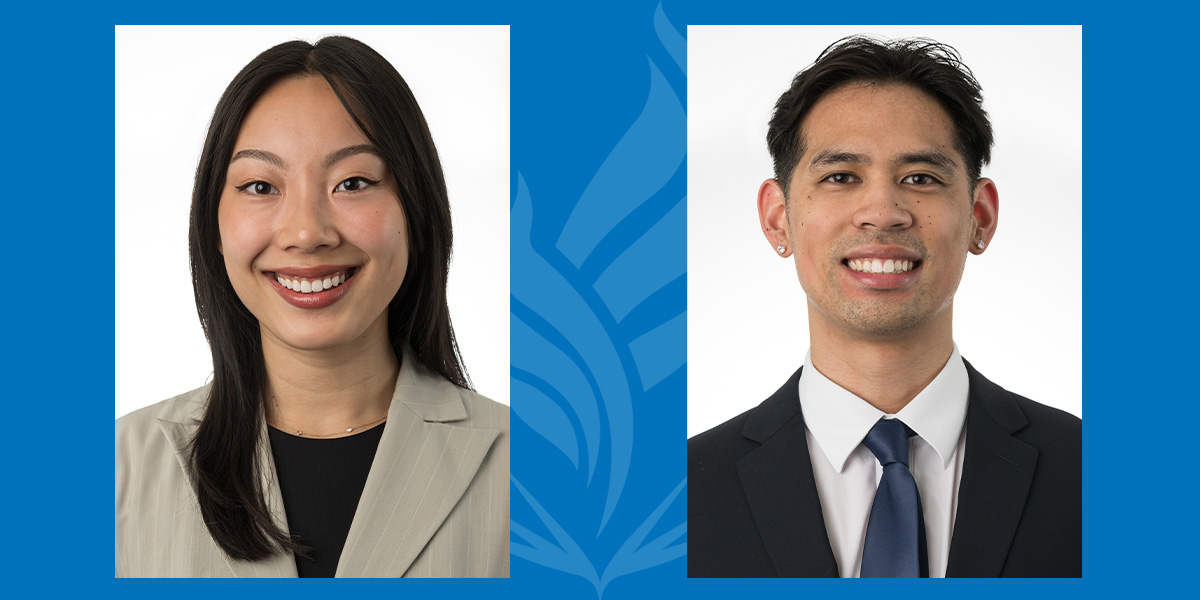
Student research spotlight: Cathy Tang and Christian Ong
Second-year medical students Christian Ong and Cathy Tang were one of more than 200 NEOMED students to present their scholarly work at the 2025 Student Research Symposium. Tang and Ong shared with The Pulse the inspiration for their work, what they learned and next steps for this research, titled “Beyond Income: Social Barriers and Health Outcomes among People with Serious Mental Illness.”
What was your inspiration to study social barriers for mental health treatment?
This study was motivated by the persistent gap in physical health outcomes among individuals with serious mental illness (SMI). Although this population has frequent contact with the healthcare system, they continue to experience disproportionately poor health. Prior research has focused heavily on objective socioeconomic indicators such as income and education, but less is known about more proximal social barriers, such as food insecurity, perceived social standing. We aimed to better characterize how these structural and psychosocial factors relate to healthcare utilization, self-reported physical health, and beliefs and attitudes about healthcare in a safety-net outpatient population.
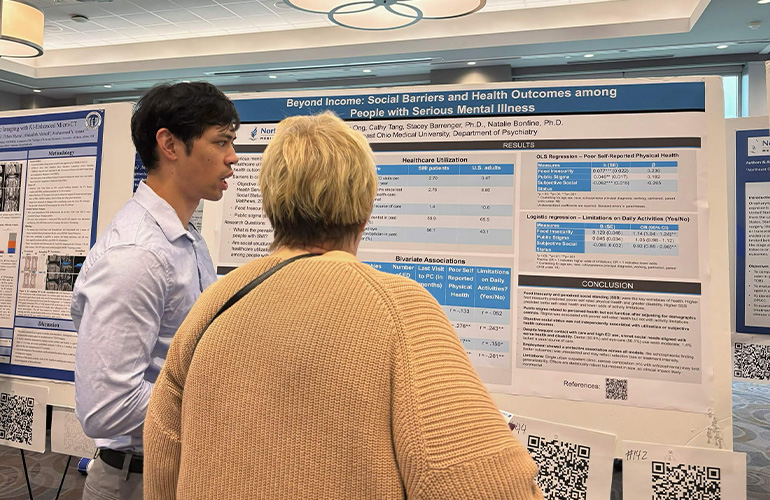
What were some of your main findings?
In a survey of 214 adult outpatients with SMI, food insecurity and subjective social status (SSS) emerged as the strongest correlates of health and healthcare beliefs. Christian found that greater food insecurity was associated with poorer self-reported physical health and higher odds of activity limitations, while higher subjective social status predicted better health and lower disability. Public stigma was linked to worse perceived health but did not independently predict functional limitations after adjustment. Cathy found that greater food insecurity and lower SSS were associated with greater rates of missed care and dissatisfaction. Notably, objective social status (income/education proxies) was not independently associated with utilization, health outcomes or healthcare beliefs. Overall, despite high engagement with primary care and notable emergency department use, patients with SMI continued to experience worse health and disability outcomes, which our findings suggest may be driven in part by unmet social needs, particularly food insecurity.
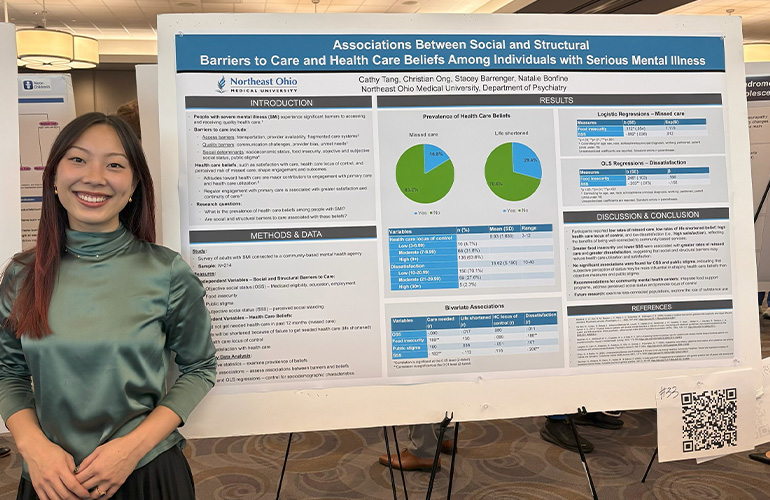
How will your research improve health for the public?
These findings suggest that improving outcomes for people with SMI requires moving beyond traditional socioeconomic metrics and more directly addressing modifiable social needs. Routine screening for food insecurity, perceived social standing and stigma within mental health settings could enable earlier social service referrals and targeted interventions. At a systems level, integrating these social-determinant measures into clinical workflows and public health policy may help reduce functional impairment and improve overall well-being in this high-risk population.
What are your next steps?
Our next steps include preparing the manuscript for peer-reviewed publication and exploring additional analyses to better understand potential mediators and moderators of these relationships. Longer term, Christian is interested in continuing research at the intersection of social determinants, mental health, and healthcare utilization, with a focus on identifying scalable interventions that can be implemented in community mental health settings, while Cathy is interested in examining populations less connected to health services and exploring the role of substance abuse.