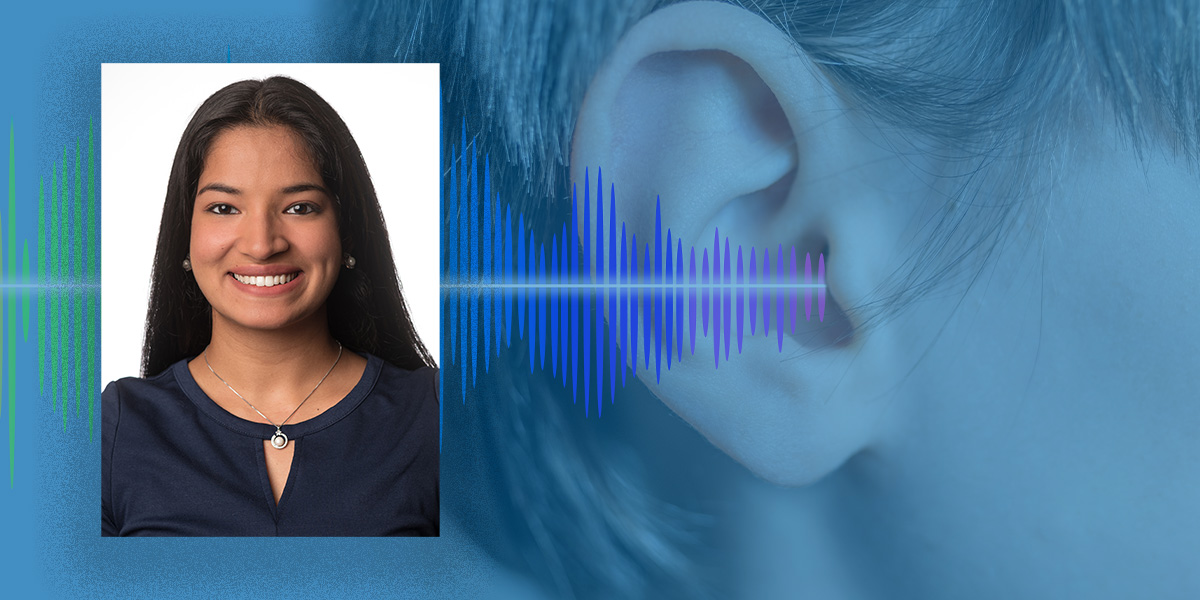
Student research spotlight: Loga Iyer
Third-year medical student Loga Iyer was one of more than 200 NEOMED students to present their scholarly work at the 2025 Student Research Symposium. Iyer shared with The Pulse the inspiration for her work, what she learned and next steps for her research, titled “Impact of Anesthetics on Auditory Brainstem Response Testing in Children: A Systematic Review.”
What was the inspiration for this project? What led you to the topic?
My inspiration for this project began during my ASPO* observership at Cincinnati Children’s, where I developed a strong interest in the pediatric population and multidisciplinary care. I observed that many children undergoing evaluation for hearing loss required auditory brainstem response (ABR) testing to obtain a formal diagnosis. During the search process, I was surprised to learn how many different anesthetic agents and sedation approaches were used for ABR testing, with little clear consensus on best practice. Recognizing how critical accurate ABR results are for early hearing loss diagnosis and long-term developmental outcomes, I became interested in exploring how anesthetic choice might influence test reliability, which ultimately led to this systematic review.
Briefly describe the work. What were the key findings you shared?
Our study systematically reviewed the pediatric literature on anesthetic use during ABR testing, screening over 500 studies, and including 24 with more than 6,000 patients. We found that anesthetic choice and route of administration can influence both sedation success and ABR waveform integrity. Intravenous propofol was generally associated with reliable sedation and minimal impact on ABR results, while some volatile agents, such as sevoflurane, were linked to greater waveform changes and potential false positives. Overall, the findings highlight variability in practice and the need for clearer, evidence-based guidelines.
What is the potential impact of the research, especially in terms of human health?
This research has important implications for pediatric hearing health and clinical care. Accurate ABR testing is critical for early detection of hearing loss, which directly affects speech, language and cognitive development. If sedation changes ABR results or increases false positives, it could lead to misdiagnosis, unnecessary treatment, or delays in intervention. By better understanding how different anesthetic approaches influence ABR outcomes, clinicians can make more informed decisions that support accurate diagnoses and improve long term outcomes for children.
Do you have plans to continue participating in research? What are your career goals?
Yes, I do. I value research because it allows us to refine and improve our understanding of clinical practices and work toward identifying optimal protocols that lead to efficient and effective patient outcomes. Moving forward, I am especially interested in projects focused on quality improvement, surgical advancements, and evidence-based approaches that enhance patient safety and multidisciplinary care. Building on my prior research experiences, I hope to continue contributing to studies that translate directly into meaningful improvements in clinical practice.
Anything else you’d like to add?
I am grateful for the opportunity to present this work as a poster and to collaborate with peers on this project. I am also proud that our work was published in the International Journal of Pediatric Otorhinolaryngology, and I appreciate the mentorship and teamwork that made this research possible.
*American Society of Pediatric Otolaryngology