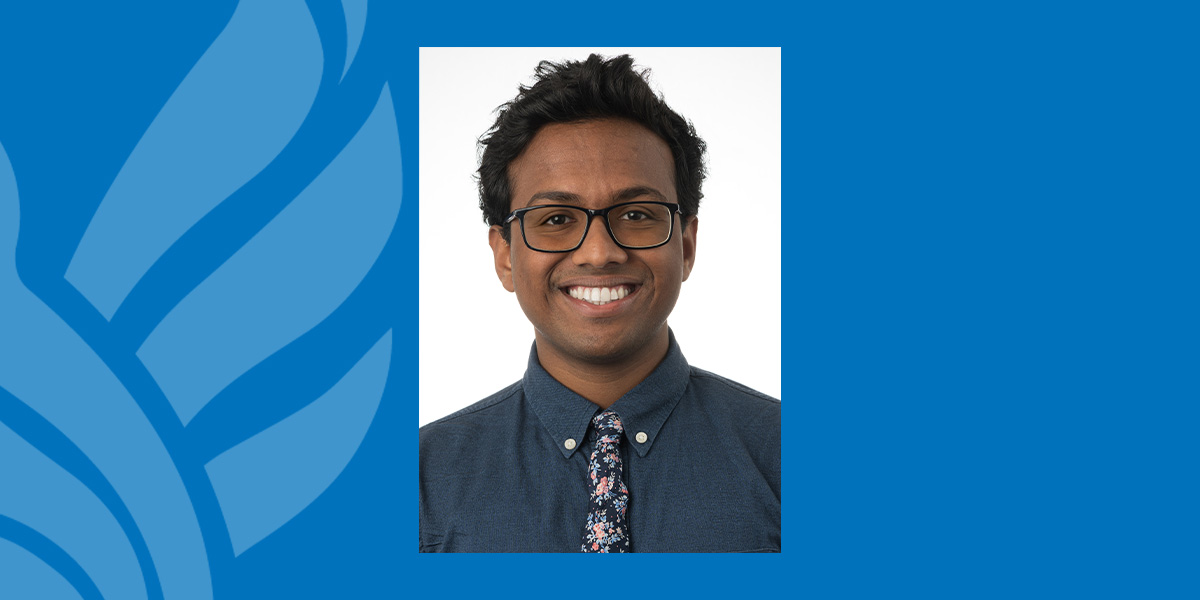
Student research spotlight: Sanat Subhash
Second-year medical student Sanat Subhash was one of more than 200 NEOMED students to present their scholarly work at the 2025 Student Research Symposium. Subhash shared with The Pulse the inspiration for his work, what he learned and next steps for his research, titled “An Epidemiological Assessment of Hemodialysis, Continuous Kidney Replacement Therapy, and Peritoneal Dialysis in Pediatric Acute Kidney Injury Patients.”
What inspired this project?
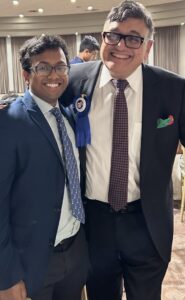 My interest in pediatric nephrology and critical care led me to this topic. During my research with [pediatric nephrologist and NEOMED professor] Dr. Rupesh Raina, I saw how often children with acute kidney injury require dialysis, yet there is limited large-scale national data comparing outcomes across modalities. That gap motivated us to study real-world patterns using the TriNetX electronic healthcare record database.
Photo: Sanat Subhash with Dr. Rupesh Raina at a recent conference.
Tell us about your research. What were some key findings?
We analyzed 7,476 pediatric patients with acute kidney injury who received hemodialysis (HD), peritoneal dialysis (PD), or continuous kidney replacement therapy (CKRT). CKRT patients had higher comorbidity burdens and consistently higher mortality, ICU admission, and ventilation rates at 30, 90, 180 and 365 days. HD and PD were associated with lower mortality and resource utilization, likely reflecting differences in illness severity. Our findings provide one of the largest multi-institutional descriptive analyses of pediatric dialysis modality use in the United States.
Potential impact on human health
Acute kidney injury in children is associated with prolonged ICU stays and long-term morbidity. By identifying risk gradients across dialysis modalities, our study helps clinicians better understand which patients are at highest risk and support earlier recognition and individualized modality selection. Ultimately, the goal is to improve survival and reduce disparities in pediatric kidney care.
Future plans and career goals
I plan to continue participating in clinical and EHR outcomes-based research throughout medical school and residency. I hope to continue working with Dr. Rupesh Raina and my career goal is to become a dermatologist.
Anything else you'd like to add?
This project was especially meaningful to me because it represents collaboration across institutions, and we are very grateful for Dr. David's Kaelber's support with the TrinetX EHR database [Dr. Kaelber is a faculty member at Case Western Reserve University]. This reflects NEOMED’s emphasis on scholarship that directly informs patient care. I am very grateful for the mentorship and research opportunities I have received with Dr. Rupesh Raina, and the support from other members of the Raina lab, including Haziq Rabbani and Nicholas Pantelakis.