Managing mental health is a ‘team sport’
Toughness is a defining trait of being a collegiate athlete – being able to handle grueling workouts, play through injuries and making sacrifices all come with the territory.
College athletes face significant stress as they work to balance the demands of academics, athletics and personal mental wellness. A 2025 cross-sectional study found that among college student athletes, 22.3 % were at risk of developing depression, 12.5% anxiety and 8% low self-esteem. But what happens when the need to be “tough” interferes with well-being and the ability to ask for help? Jessica Zavala, M.P.A., director of the Ohio Program for Campus Safety and Mental Health (OPCSMH), is working to address this issue.
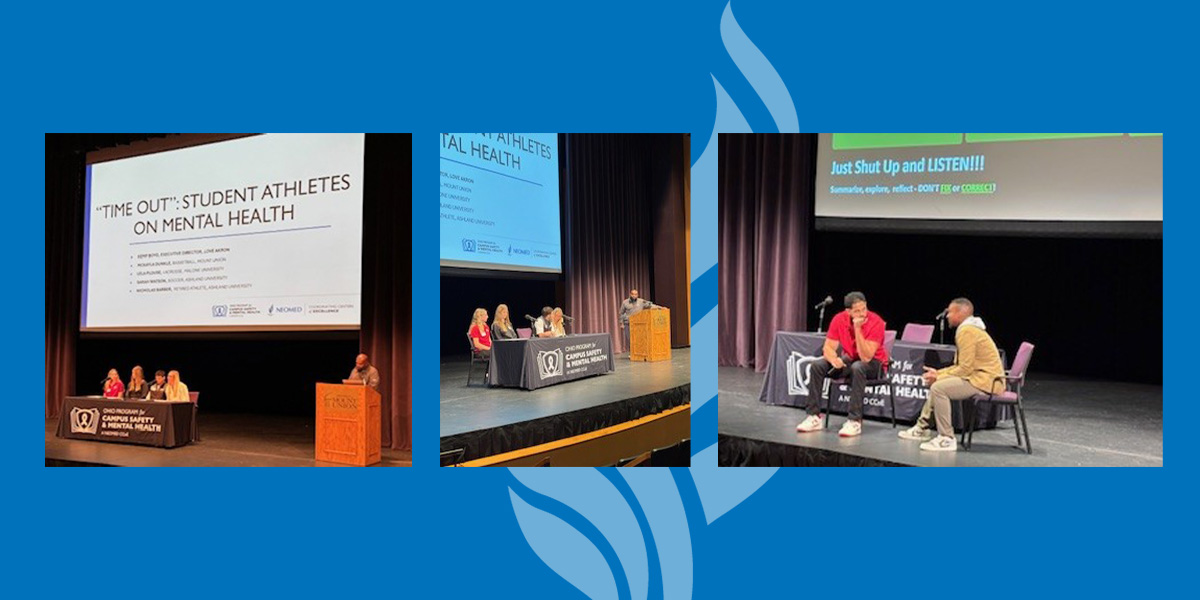
The OPCSMH, one of NEOMED’s Coordinating Centers of Excellence, recently held its Third Annual Suicide Prevention Symposium, titled “Beyond the Game: Teaming Up for Suicide Prevention,” at the University of Mount Union.
“Suicide is the second-leading cause of death for college-age students, and college athletes experience unique stressors impacting their mental health and wellness,” said Zavala. “Addressing suicide prevention is the responsibility of each and every person in our campus communities.”
The symposium featured a keynote address from Quentin Shambley, M.S.N., RN, who shared his journey as a psychiatric nurse practitioner and former Division I athlete, emphasizing empathy and early intervention in sports. James Houlse, Ph.D., lead sports psychologist at The Ohio State University, highlighted mindfulness and positive psychology as tools to prevent suicide in athletic communities during his keynote remarks.
The audience also heard from panels that featured current student-athletes from throughout Ohio, as well as a panel of coaches, trainers and counselors who shared the issues they see firsthand while working with student-athletes.
“We have consistently heard from our campus-community partners about the critical need to support the mental health and well-being of collegiate athletes,” said Zavala. “This event was tailored with the student-athlete in mind with resources dedicated to helping collegiate athletes build resilience, improve well-being and prevent suicide.”
One particular message from the symposium stood out for attendees: suicide prevention is a marathon, not a sprint. It takes “teaming up” from everyone involved, from teammates to coaches to support staff.
“The feedback from attendees underscored the power of hearing lived experiences and the importance of continuing to break down stigma through honest dialogue,” said Zavala, noting that the panel discussions among current and former student-athletes were extremely powerful.
More information
For more information about preventing suicide on campuses including current training opportunities via the Ohio Program for Campus Safety and Mental Health, visit: neomed.edu/csmh/