Summer research spotlight: Ani Muralidharan
Ani Muralidharan, a second-year student in the College of Medicine, had the opportunity this summer to participate in research in the lab of Monika Haack at the Harvard Medical School Division of Sleep Medicine. He shared his thoughts on the experience in a Q&A with The Pulse.
Where did you learn about this experience? How did your participation come about?
I learned about the Harvard Medical School Division of Sleep Medicine's summer research training program while looking for opportunities to explore research outside of my home institution. I've always been interested in neuroscience and how sleep affects overall health, so the program immediately caught my attention. I applied and was fortunate to be selected to spend the summer conducting research at Beth Israel Deaconess Medical Center (BIDMC) in Boston under the mentorship of Dr. Monika Haack.
Briefly describe the project.
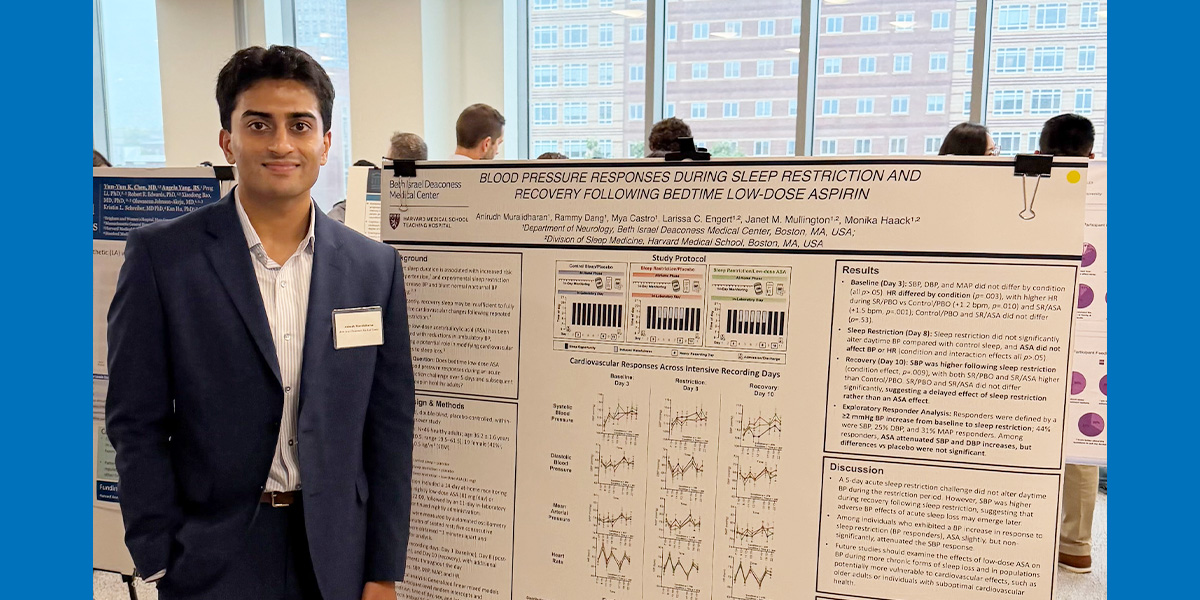
My project examined how sleep restriction affects blood pressure and whether taking low-dose aspirin before bedtime could help reduce some of those cardiovascular effects. We analyzed data from a randomized, placebo-controlled crossover study in which healthy adults underwent periods of normal sleep, restricted sleep and recovery sleep. We were particularly interested in how blood pressure changed throughout these periods and whether aspirin influenced those responses. Ultimately, the goal was to better understand the cardiovascular consequences of insufficient sleep, something that is incredibly relevant given how common sleep deprivation is in everyday life.
What was your role on the project?
I worked closely with Dr. Haack and the research team to analyze blood pressure data, interpret our findings, and develop a scientific manuscript. Much of my work involved examining patterns in blood pressure across different sleep conditions and identifying differences in how individuals responded to sleep restriction and recovery.
What were some of your biggest takeaways from participating in this research?
One of my biggest takeaways was gaining a better appreciation for how much sleep influences our health beyond simply feeling tired. We often think of sleep deprivation in terms of fatigue or difficulty concentrating, but its effects on cardiovascular physiology are just as important.
Beyond the research, I really valued being surrounded by people who were passionate about their work. Getting to learn from investigators who have dedicated their careers to studying sleep was incredibly motivating.
Have you participated in research before?
Yes! Before medical school, I worked as a clinical research coordinator at Northwestern University's Feinberg School of Medicine, primarily on clinical trials involving neuromuscular diseases such as amyotrophic lateral sclerosis (ALS), myasthenia gravis, and inflammatory myopathies. I've also been involved in research at the Cleveland Clinic and University Hospitals since joining NEOMED.
Are sleep disorders a particular interest for you?
Absolutely! My primary interest has always been neurology, but I've become increasingly interested in how closely sleep and neurological health are connected. Sleep is fundamentally regulated by the brain, and disruptions in sleep can have widespread effects on neurological function and overall health.
What I find especially interesting is how the relationship goes both ways. Neurological conditions can significantly disrupt sleep, while poor sleep can also influence neurological health and disease progression. Spending the summer studying the cardiovascular effects of sleep restriction gave me a new appreciation for just how interconnected these systems are.
How will this experience help you as a medical student? As a future physician?
I think one of the most valuable aspects of this experience was learning how to approach clinical questions from a research perspective. As medical students, we spend so much time learning established medical knowledge, but research reminds us that there are still countless questions we don't have answers to. Working on this project strengthened my ability to critically evaluate data, interpret research findings, and think about how those findings might eventually translate into patient care.
As a future physician, I hope to remain involved in clinical research alongside caring for patients. This experience reinforced my interest in becoming a physician who not only applies evidence-based medicine but also helps contribute to the evidence that guides it.
What would you tell other students who are considering similar experiences?
I would absolutely encourage other students to apply, even if they aren't sure they're qualified or don't have extensive research experience. There are so many researchers who are genuinely excited to mentor medical students who show interest, curiosity, and a willingness to learn. I'd also encourage students to look beyond opportunities that perfectly align with their intended specialty. Some of my most valuable experiences have come from exploring areas of medicine that I hadn't initially considered.
Anything else you'd like to add?
I'm incredibly grateful to Dr. Monika Haack and the entire research team at Beth Israel Deaconess Medical Center for welcoming me and making this such a rewarding experience.