What’s next in pharmacy?
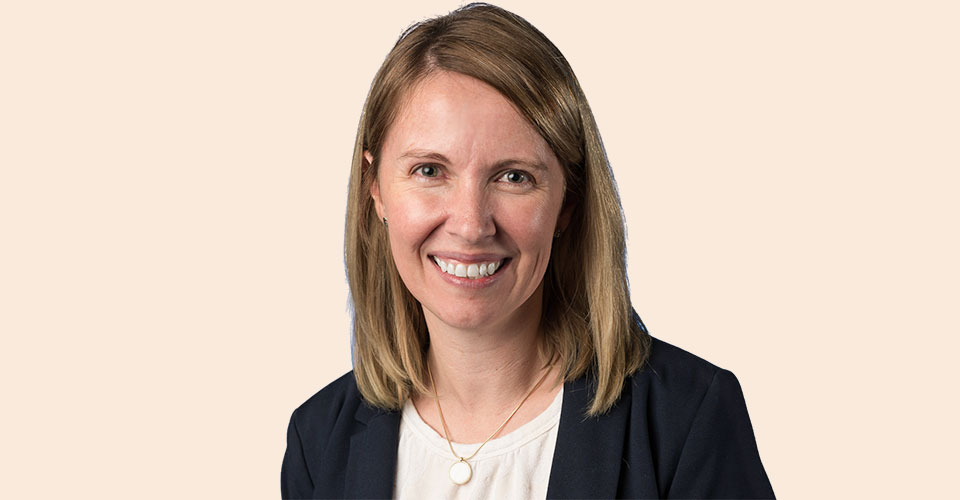
Katherine Tromp, Pharm.D., has been appointed as interim dean of the College of Pharmacy following the retirement of Richard Kasmer, Pharm.D., J.D. Dr. Tromp began the new role effective June 5, 2023, and will continue her duties as the senior associate dean for the College of Pharmacy.
The Pulse sat down with Dr. Tromp to learn more about her new role as interim dean.
What are you looking forward to the most in your role as interim dean of the College of Pharmacy?
It is truly an honor to have the opportunity to lead the College of Pharmacy. There are so many things to look forward to in this role! One thing in particular that I look forward to is the opportunity to make meaningful change that can build on the already outstanding program that we have.
How will you interact with students in this role?
I hope to interact with students as much as possible! I plan to continue the ‘Lunches with the Dean’ for the P1 class that Dean Kasmer used to host. I will also attend the student class meetings so that I can share updates and hear what is going on with each class. Since I still will maintain my responsibilities as senior associate dean of education, I also have the privilege to be part of the Student Curriculum Council.
Other opportunities to interact with students will be in the classroom. I will be the course director for the Pharmacy Skills courses for our first-year students, and I will spend a lot of time in those classes. I will also teach Pharmacotherapy courses for P2 and P3 students. The classroom is always a wonderful place to interact with students. Most importantly, students are welcome to come visit me in my office at any time!
What is something the general public may not know about the role of the pharmacist?
One thing that the general public may not know about the role of the pharmacist is how many roles are available to pharmacists! Oftentimes people think about the pharmacist in the community setting like at Walgreens or CVS. Many pharmacists do work in settings like that; however, pharmacists work in many other places as well such as hospitals, outpatient clinics, managed care, medical writing and the pharmaceutical industry. There are a ton of opportunities for pharmacists after graduation in very diverse areas.
What is an important piece of advice you would pass along for pharmacy students who will start in the fall?
My advice is a single word: ENGAGE!
The goal of pharmacy school should be to master the information to the best of your ability and not to do the minimum to pass. The effort that students put into learning the material in pharmacy school should have less to do with passing the courses and more to do with being as knowledgeable as possible to provide the best care for patients after graduation.
Pharmacy school will be the most rewarding if students engage with the material, classmates, faculty and extracurricular activities. Students who show up both mentally and physically every day will develop a deep understanding of the material and will create lasting bonds with classmates and faculty. Eventually, this will lead to success in licensure and careers.
How has the role of the pharmacist changed during your time in the profession?
Since entering the profession, I have seen the role of the pharmacist expand quite significantly. My residency and background are in community practice. I graduated from pharmacy school around the time of the H1N1 pandemic, which resulted in a major shift in pharmacists becoming a major provider of immunizations. Since that point in time, most community pharmacies started requiring pharmacists to become certified immunization providers. With that shift, we have seen increases in the number of vaccines that pharmacists can provide.
Once the COVID-19 pandemic hit, the importance of the role of pharmacists as immunizers became even more evident. With this most recent pandemic, we also saw the pharmacist’s role expand into testing for illness. I expect to see the pharmacist’s role in the community setting continue to expand at variable rates depending on the state. And this is just the community pharmacy sector! There has been tremendous change and growth in a multitude of other areas such as specialty pharmacy, medical cannabis and precision medicine. Our knowledge of the human body, disease and treatment continues to expand at an accelerated rate, and the career of the pharmacist will continue to adapt to meet the changing needs of patients.