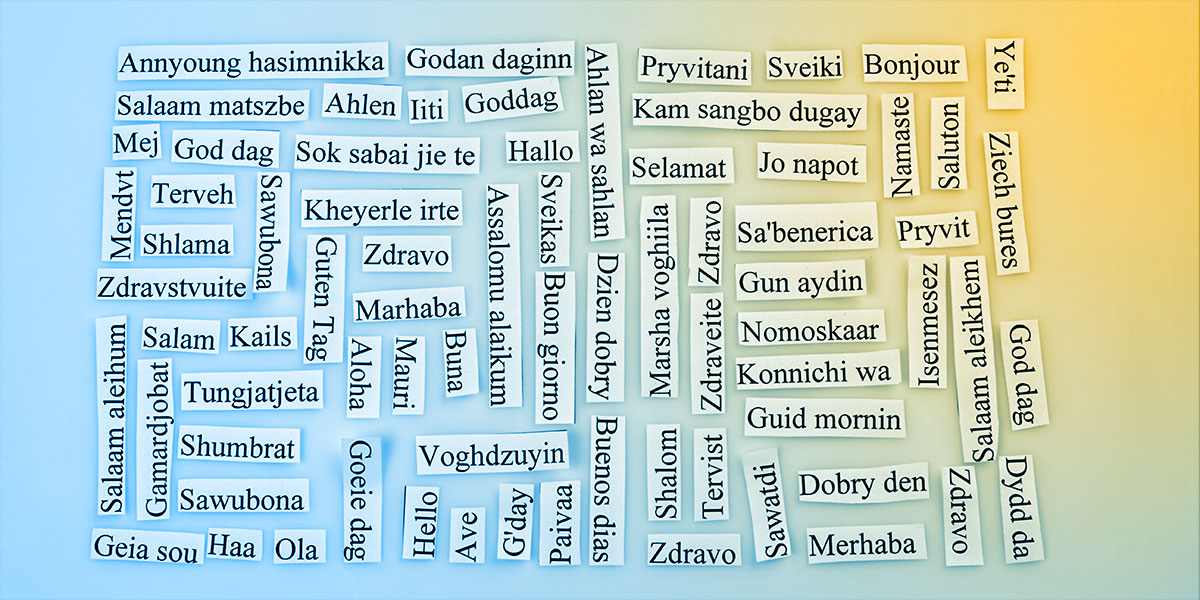
Why every medical student should learn a second language
By Sheila Rodriguez, M2
When I first started medical school, I did not think much about how big of a barrier language could be in healthcare. I assumed that since hospitals had interpreters, communication would not be a problem. Most of the time, though, interpreters are provided through tablets, which can create a disconnect. The more I worked with Spanish-speaking patients, the more I realized how different it feels when you can actually speak to someone in their own language without a middleman. Being born in a Spanish-speaking country, I was able to speak Spanish, and I quickly saw how much of a difference it made when I was able to communicate directly with my patients.
In a recent lecture, we learned some American Sign Language (ASL) to better communicate with patients who are deaf or hard of hearing, and I thoroughly enjoyed it! It opened my eyes to just how important it is for us as medical professionals to be able to communicate in diverse ways. For patients who cannot hear, language is not just about words or gestures. It is about truly being able to understand and connect. In fact, when I learned even just a few basic signs, I realized how much more comfortable I felt when I could use them to communicate with patients who use ASL. I think medical schools should include this kind of training more regularly to help future doctors feel more prepared and confident in those interactions.
For many patients, language is not just about words. It is about trust. Imagine being sick, scared, and vulnerable, only to have to explain what is wrong in a language you do not fully understand. Even with an interpreter, the conversation feels different. There is a delay, and sometimes little details get lost in translation. I have seen patients nod along, not because they fully understand, but because they do not want to make things harder. Others hold back questions, worried they will not be able to say exactly what they mean.
Speaking a patient’s language can change everything. I can see the relief on their face, the way their body relaxes. They talk more, ask more questions, and feel safer knowing they do not have to filter their words. It is a small thing that makes a huge difference.
This is why I think every medical student should at least try to learn a second language. Fluency is not necessary. Just knowing basic phrases like “¿Dónde le duele?” (Where does it hurt?), “¿Cómo se siente?” (How do you feel?), or even some basic ASL signs can change the whole dynamic of a patient interaction. It shows effort, respect, and a willingness to meet them where they are.
Medical school is already overwhelming, and adding another thing to learn sounds impossible. Small steps can go a long way. Picking up common medical phrases, practicing with patients, or even using language apps can make all the difference. At the end of the day, medicine is about connection, and language, whether spoken or signed, is one of the most powerful ways to build it!