Labyrinth and restorative yoga for students
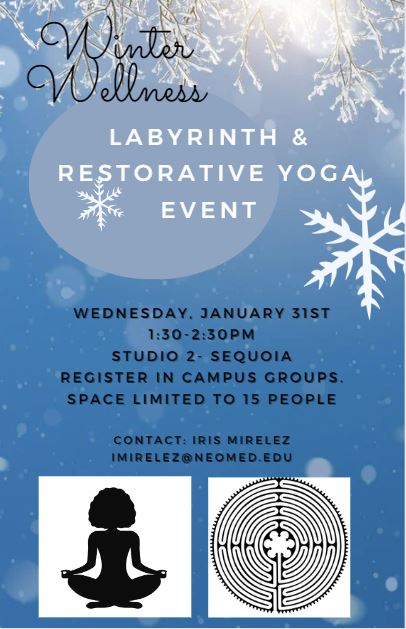
Students are invited to join Iris Mirelez, M.Ed., for an hour-long blend of a labyrinth and restorative yoga from 1:30-2:30 p.m. Wednesday, Jan. 31, in Studio #2 in the Sequoia Wellness Center.
The first portion of the event will be spent with the labyrinth then transitioning to a guided restorative yoga class. The intention is to give participants an opportunity to experience both relaxing formats.
No previous experience necessary. All students are welcome including beginners and those seasoned in these modalities. All necessary materials and props will be provided.
Registration is required and space is limited to 15 students. Same day registration allowed (if under 15 registrants).
What is a labyrinth?
The labyrinth is a single, spiraling path that leads to a central area. You walk the same path back out returning to the beginning. There are no tricks or dead ends unlike mazes. The labyrinth is often referred to as an archetypal image as it emerged in different cultures over 4,000 years ago and is thought of as a mirror or metaphor for the spiritual journey and the evolutionary spiral of life.
Why walk the labyrinth?
Many walk the labyrinth for grieving the loss of loved ones, facing personal struggles or coping with change. Others use this walking meditation to focus the mind, to manage stress, to induce a peaceful state to help clear the mind and to tune into their higher power or inner self. The labyrinth can be a path of prayer, meditation, introspection and healing.
What is restorative yoga?
Restorative yoga is a restful practice that holds yoga poses for a longer duration using props like yoga blocks, blankets and bolsters. It is a practice of deep relaxation that emphasizes the meditative aspect of yoga—the union of body and mind. Through the use of props for support, many of the postures are held almost effortlessly.
Why participate in restorative yoga?
By allowing time for longer supported yoga postures and deeper breathing, restorative yoga helps elicit the relaxation response. This response can help slow breathing, reduce blood pressure and produce a feeling of calm and increased well-being.